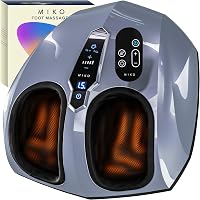
What Does a Foot Massager Actually Do?
A foot massager kneads, rolls, compresses, or warms your feet to create a relaxing sensation and ease everyday tension. The feel depends on the device and its settings.
On this page (8 sections)
- What does a foot massager do to your feet?
- How do kneading, rolling, and compression feel different?
- What does heat add to a foot massage?
- Can a foot massager help with soreness or circulation?
- Does a foot massager work on the whole foot?
- How should you choose a foot massager?
- How long should you use a foot massager?
- What does a foot massager do, in practical terms?
A foot massager kneads, rolls, compresses, or warms your feet to create a relaxing sensation and ease everyday tension. The feel depends on the device, the area it reaches, and the settings you choose.
Some models work mainly on the soles. Others add pressure around the instep or ankles, or let you position the unit to reach the calves.
These features change the kind of massage you feel; they don't make the device a medical treatment.
What does a foot massager do to your feet?
A foot massager applies repeated pressure or warmth to parts of your feet. Rollers move beneath the sole, kneading nodes press into it, and air chambers may tighten and release around the foot.
The result is a massage sensation that can feel gentle or firm. Your comfort depends on the pressure, the fit, and how sensitive your feet are.
A device may also help you settle into a quiet rest after walking, standing, or exercise. It doesn't fix the cause of foot pain or guarantee a health benefit.
How do kneading, rolling, and compression feel different?
Kneading presses into the foot, rolling moves along it, and compression squeezes around it. A unit may combine these actions or let you select among modes.
Kneading can feel like firm pressure under the arch or forefoot. Rolling tends to feel like movement across the sole, while compression adds pressure around the sides or top of the foot.
The Nekteck Shiatsu Foot Massager with Heat combines deep-kneading nodes, 3 preset massage modes, and 2 compression levels. Its maker cautions that it may not suit people sensitive to kneading pressure, so start low and stop if it feels uncomfortable.
A foot massager may not reach every part of your foot. If you're trying to target the instep, see whether foot massagers reach the top of the foot.
What does heat add to a foot massage?
Heat adds warmth, not a stronger massage. It may feel pleasant when your feet are cold, but it isn't required for kneading or rolling to work as a comfort routine.
Heat settings vary by device. Some turn on separately from the massage, and some take a few minutes to warm up.
Follow the device instructions, and stop using heat if it becomes uncomfortable.
The Medcursor Shiatsu Foot Massager with Heat combines kneading and several massage modes with optional heat. Its heat function may take 5–10 minutes to warm up.
For more warmth-focused options, compare heated foot massagers for cold evenings. If you're deciding whether a machine suits your needs at all, what to expect from a foot massager covers common benefits and limits.
Can a foot massager help with soreness or circulation?
A foot massager may feel relaxing after everyday activity, but that sensation doesn't guarantee a medical effect. Product makers sometimes describe massage or compression as supporting circulation or easing discomfort; those claims aren't a diagnosis or a promise of treatment.
Don't use a massager to delay care for ongoing pain, swelling, numbness, or another persistent symptom. Ask a clinician whether a device is suitable if you have a condition that affects your feet or ability to feel pressure or heat.
The Nekteck, Medcursor, Cloud Massage, and Renpho models described here are comfort devices. Their features help explain what kind of sensation they offer, not whether they can treat a health problem.
Does a foot massager work on the whole foot?
Coverage depends on the device. A model with a foot chamber may reach the sole and instep; another may focus its kneading on the forefoot, arch, or toes.
The Renpho Thermacool 2-in-1 Foot Massager with Heat and Cold has adjustable kneading and compression. Its cooling function targets the heel, while its deep kneading is designed for the forefoot, arch, and toes; the heat covers the arch and top of the foot.
Heat and cooling cannot run at the same time on this Renpho model. Check the fit guidance too: it fits men's US sizes up to 13, and people with very different foot sizes may notice a difference in comfort.
For an option that can also be positioned for ankles or calves, the Cloud Massage Shiatsu Foot Massager has an adjustable tilt bar and adjustable intensity. Its maker describes rollers that target the feet, ankles, and calves, with 2 heat levels and multiple modes.
Those wider coverage options may suit someone who wants to change the target area. Compare the details in our guide to home foot massager machines.
How should you choose a foot massager?
Start with the sensation and area you want. Decide whether you want rolling, kneading, compression, warmth, or a mix, then check the coverage and fit before choosing a model.
Consider these points:
- Pressure: If strong kneading sounds unpleasant, look for low settings or adjustable intensity.
- Coverage: Check whether the device works on the sole alone or also reaches the instep, ankle, or calf.
- Heat: Decide whether warmth matters to you and whether it can be controlled separately.
- Fit: Check the maker's size guidance and compare it with your feet.
- Care: Removable, washable covers can make cleaning easier.
If you are deciding between styles, our guide to foot massagers with heat and air compression compares those features. You can also read whether a foot massager is good for your feet for a broader look at comfort and limits.
How long should you use a foot massager?
Follow the instructions for your specific device and keep the first session short. Start with gentle settings so you can see how the pressure and warmth feel.
Stop if you feel pain, tingling, numbness, or uncomfortable heat. Don't assume a longer session is better; check the device's timer and guidance.
For more on session length and frequency, see how often you should use a foot massager. Ask a clinician before use if you have ongoing symptoms or a condition that affects foot sensation.
What does a foot massager do, in practical terms?
A foot massager provides a chosen mix of pressure, movement, and warmth for a relaxing routine. It may suit you if you enjoy that sensation and the fit and settings feel comfortable.
Pick kneading or rolling if you want pressure under the soles. Pick compression if you want a squeeze around the foot, and add heat only if warmth is part of the experience you want.
Compare models by coverage, settings, and fit, then start gently. If you want a general view of how these devices feel, read what to expect from foot massagers.
Frequently asked questions
What does a foot massager do?
A foot massager uses rollers, kneading nodes, air compression, or warmth to create a massage sensation. Some models focus on the soles, while others reach the instep, ankles, or calves.
It can support relaxation after daily activity, but it doesn't diagnose or treat a medical condition.
Does a foot massager improve circulation?
Some devices use compression or massage, and their makers may describe these features as supporting circulation. A relaxing sensation doesn't prove a medical benefit, and a foot massager isn't a substitute for care.
Ask a clinician before using one if you have a health condition or ongoing symptoms.
Is heat necessary in a foot massager?
No. Heat is an optional comfort feature, while kneading, rolling, and compression can work without it.
Choose heat if warmth is part of the experience you want, and check how the device controls it.
Stop if the sensation feels uncomfortable.
Can a foot massager hurt?
Yes, firm kneading or compression can feel too strong, especially if you're sensitive to pressure. Start with the lowest setting, use a short session, and stop if you feel pain, numbness, or skin irritation.
Ask a clinician about use if you have reduced foot sensation.